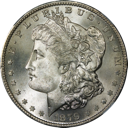
Grading the Washington Quarter
The Washington quarter, designed by John Flanagan, debuted in 1932 for Washington's birth bicentennial; 1932–1964 coins are 90% silver and 1965-onward are copper-nickel clad. The famous key dates are the low-mintage 1932-D and 1932-S, which are heavily counterfeited, so certification matters. Unlike the dime and nickel, the quarter has no special 'full strike' designation.
Last reviewed: · Free to read · Every claim sourced
New to grading? Start with how to grade a coin, step by step, and the Sheldon 1-70 scale.
At a glance
| Years | 1932–present |
|---|---|
| Designer | John Flanagan |
| Denomination | Quarters |
| Composition | 1932–1964: 90% silver, 10% copper. 1965–present: copper-nickel clad (75% Cu / 25% Ni over a copper core). Modern collector silver in proof sets. |
| Diameter | 24.30 mm |
| Weight | Silver (1932-1964) 6.25 g; clad 5.67 g |
| Edge | Reeded |
| Mints | Philadelphia (no mark / P), Denver (D), San Francisco (S, circulation 1932–1954; proofs since 1968), West Point (W, modern special issues) |
Major subtypes
| Subtype | Years |
|---|---|
| Silver, Flanagan eagle reverse | 1932–1964 |
| Clad, eagle reverse | 1965–1998 |
| Commemorative programs | State (1999–2008), DC & Territories (2009), America the Beautiful (2010–2021), American Women (2022–2025) |
Where wear shows first
- High point of the hair above the ear, then the cheekbone (obverse)
- Eagle's breast and the tops of the wings (reverse)
Other points to check
- Forehead and jaw line
- Eagle's leg/claw and wing tips
- The wreath/branches beneath the eagle
Common weak-strike areas
- Eagle's breast feathers (reverse)
- Hair detail above Washington's ear (obverse)
Strike designations
No official full-strike designation exists for the Washington quarter (no Full Bands / Full Steps equivalent); strike quality affects only the numeric grade and eye appeal.
Grading circulated coins
Good (G-4): Washington is a flat-cheeked outline with the hair a smooth cap, and the eagle's breast and wing feathers are worn away, though rims, date, and legends stay strong. Very Good (VG-8): hairlines above the ear become visible and faint feathers reappear at the edges of the eagle's breast. Fine (F-12): detail returns at the back of the hair and the curl behind the ear, and about three-quarters of the wing feathers show, though the breast and legs remain soft. Very Fine (VF-20): the hairline at the forehead appears, hair over the ear shows real definition, and breast feathers begin to separate. Extremely Fine (EF-40): the forehead hairline is clear and sharp, nearly all hair detail shows, and only the highest points of the eagle's breast and legs carry slight wear. About Uncirculated (AU-50): a trace of friction on the cheek, the hair above the ear, and the eagle's breast, with mint luster surviving in the protected fields and around the lettering. Caveat: the shallow relief compresses the circulated grades, so the difference between VF and EF is subtle; use the forehead hairline as the anchor diagnostic, and make allowance for soft eagle-breast strikes on early-1930s issues.
Grading Mint State coins
Grade-limiting contact marks cluster on Washington's forehead, cheek and neck, the eagle's chest, and the open obverse fields. Beware 'sliders'. AU coins with slight cheek/hair rub passed off as Mint State; a true MS coin keeps full original luster with no rub.
Proof grading
Proofs are graded for field mirrors and device frost, with Cameo and Deep Cameo designations. Early proofs (1936–1942) are scarce; modern proofs frequently grade DCAM.
Key dates
- 1932-D (~436,800)
- 1932-S (~408,000, lowest of the series)
Semi-key dates
- Better early dates such as 1936-D, 1935-D, 1937-S, 1939-S, 1940-D
Major varieties
- 1932 Doubled Die Obverse (FS-101)
Common problems
- Cleaning / whizzing (common on key dates)
- Altered mintmarks/dates on 1932-D/S
- Environmental damage
- 'Slider' rub on high points
Signs of cleaning or damage
- Hairlines
- Unnatural luster / whizzing
- Re-toning over cleaned surfaces
Toning
Silver issues (1932–1964) develop attractive original album/roll toning (rainbow, golden, target) that adds a premium; clad issues tone less attractively.
Counterfeit & alteration risks
- 1932-D and 1932-S heavily faked, adding a D or S mintmark to a common 1932 Philadelphia coin, plus altered dates and modern struck fakes
- Third-party certification has largely mitigated the risk
For the advanced grader
Grade is set by wear and contact marks on the hair above the ear, the cheek, and the eagle's breast, with the eagle's chest the principal reverse indicator on the 1932–1998 classic type. Watch for AU 'sliders' with faint cheek/hair rub, and, especially for 1932-D/S, for added mintmarks and altered dates, where authentication is essentially required.
Photographic examples
Click any image to enlarge and zoom. Where shown, obverse, reverse, and edge views are of the same coin and year.
Same coin: 1932 Washington quarter
More quarters to explore
Sources: Professional Coin Grading Service (PCGS) · Numismatic Guaranty Company (NGC) · United States Mint
Evidence pages
Related terms
Counterfeit · Altered Date · Mintmark · Doubled Die · Contact Marks · Wear